


Help Us Test What’s Next: Join the XPS Network AI BETA
We are at the final stage before releasing the new AI-powered features for XPS Network, and before anything goes...
Read More
November 16, 2026
10 min reading
The Royal Yachting Association (RYA) uses XPS Network across the British Sailing Pathway to connect physical testing, athlete development profiles and coach observations. This helps sailors and their support teams understand progress and agree on what to work on next.
The route from youth sailing to senior competition rarely follows a straight line. Young athletes may train with different coaches, compete in several parts of the country and eventually move into a new class, where both the boat and its demands can change significantly.
The Royal Yachting Association supports talented young sailors as they progress from youth sailing towards senior Olympic classes and, for some, the British Sailing Team. Its pathway covers several classes, each with its own technical and physical demands.
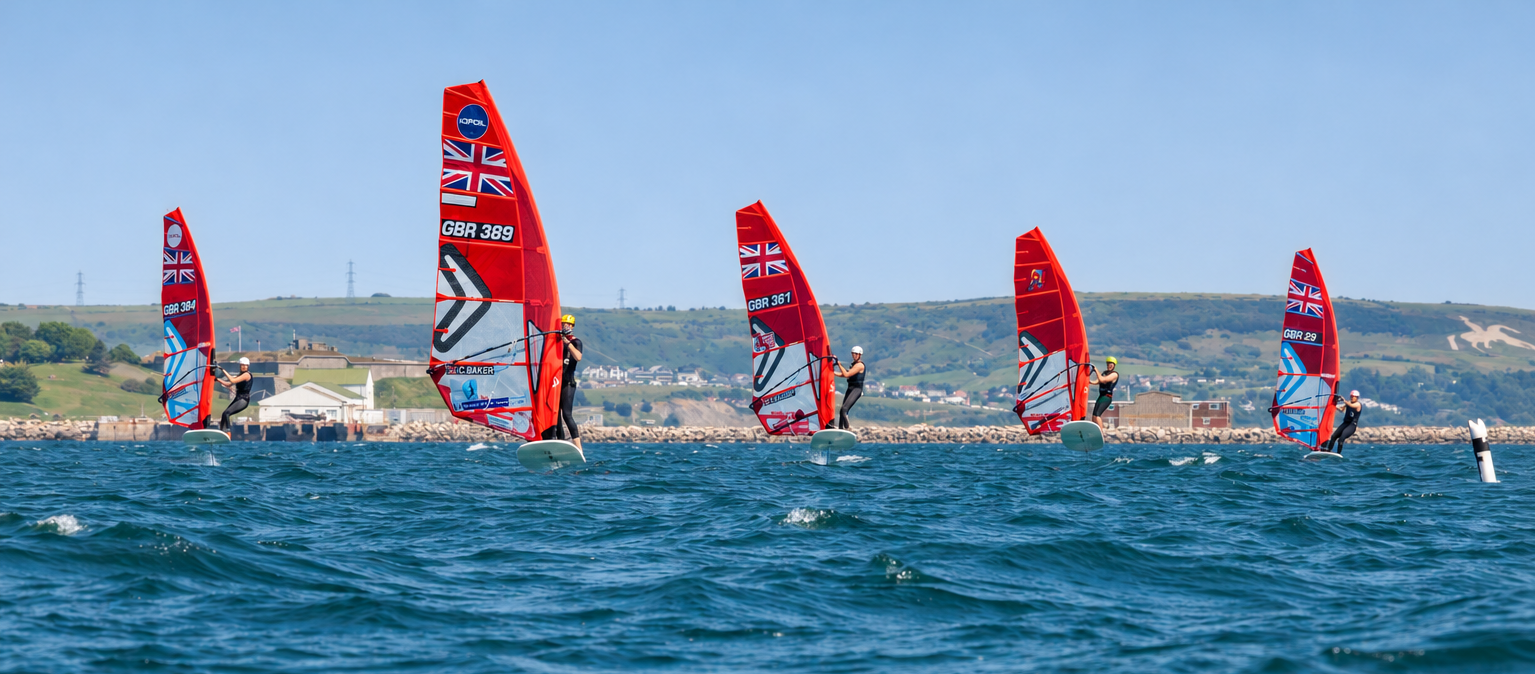
Keeping that pathway connected is a challenge. Coaches and support staff need a clear view of each athlete’s progress, while the young people themselves need to understand where they are heading and which areas deserve attention.
The pathway is designed for long-term growth rather than quick results. For Jonny McGovern, Performance Pathway Manager, the real aim is to prepare young athletes for what they will need later in their careers: “Our aim is not simply to produce better sailors in the short term. We want to help young athletes develop the skills, physical capabilities, behaviours and understanding they will need to succeed later in their sailing careers.”
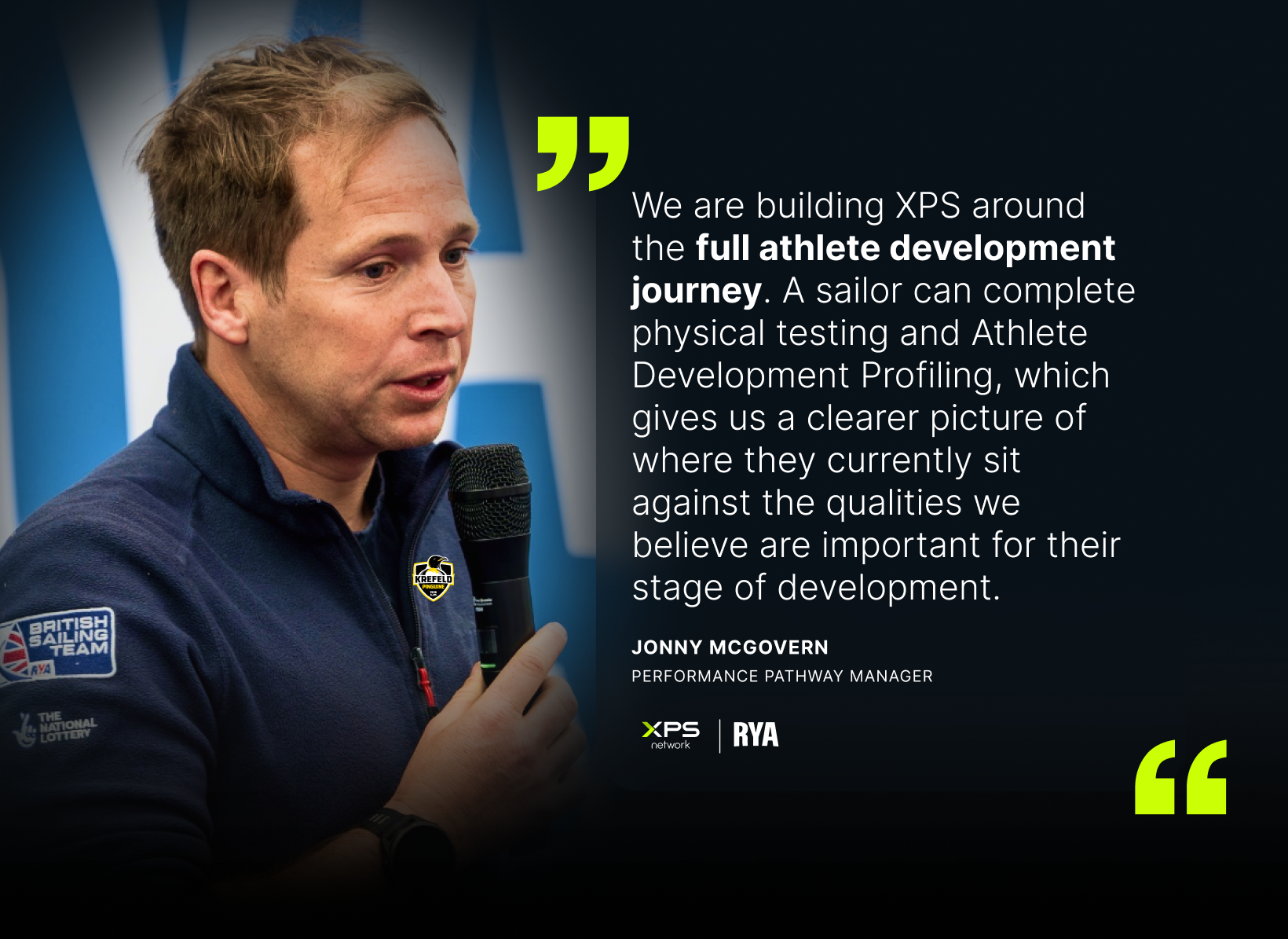
That same long-term view shapes how the RYA uses XPS throughout the pathway. The platform begins with a clearer picture of the athlete and leads towards priorities agreed with the people supporting them: “We are building XPS around the full athlete development journey. A sailor can complete physical testing and Athlete Development Profiling, which gives us a clearer picture of where they currently sit against the qualities we believe are important for their stage of development. From there, the information can be discussed between the sailor, coach and support team to identify priority areas.”
Bringing those parts of the pathway together makes progress easier to follow for everyone involved, from the athlete and class coach to pathway staff and specialists.
XPS Network and the RYA have also designed a white-label version of the app with its own RYA interface, so sailors recognise it as part of their pathway rather than another separate platform.
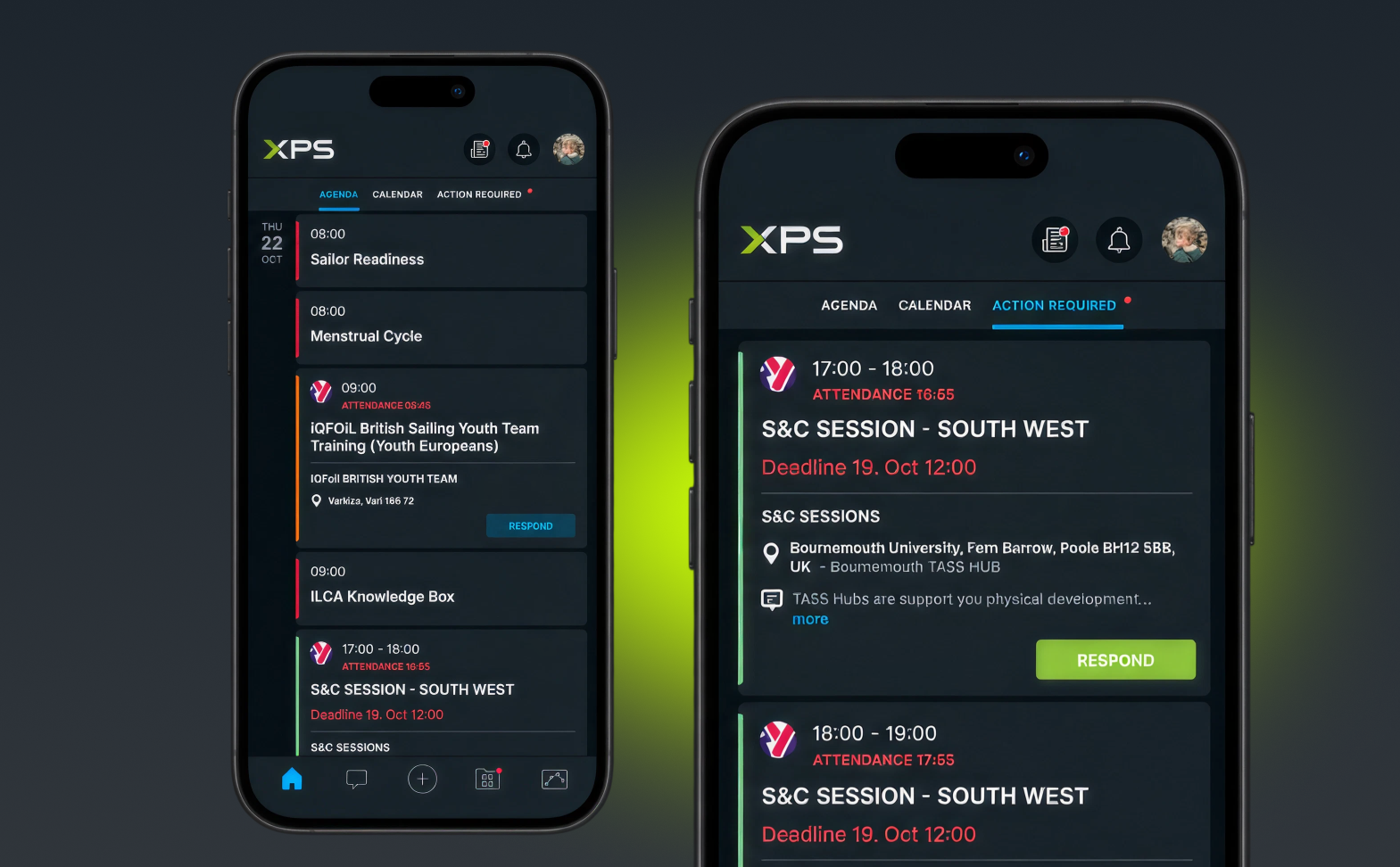
For Jonny McGovern, Performance Pathway Manager, that sense of belonging was the whole point: “Giving the app an RYA interface was about making it feel familiar, welcoming and relevant to our sailors. We want them to feel that XPS is part of the RYA pathway, not just another platform they have to use. By bringing the experience closer to our identity, we can create a stronger sense of belonging and a shared purpose across the whole team.”
Athletes on the British Sailing Pathway are based throughout the UK. They train in different environments and work with class coaches, pathway coaches, strength and conditioning staff and other specialists.
The RYA brings these groups together regularly at central venues for athlete and coach training. These camps provide valuable time on the water, but much of the development work continues once everyone returns home.
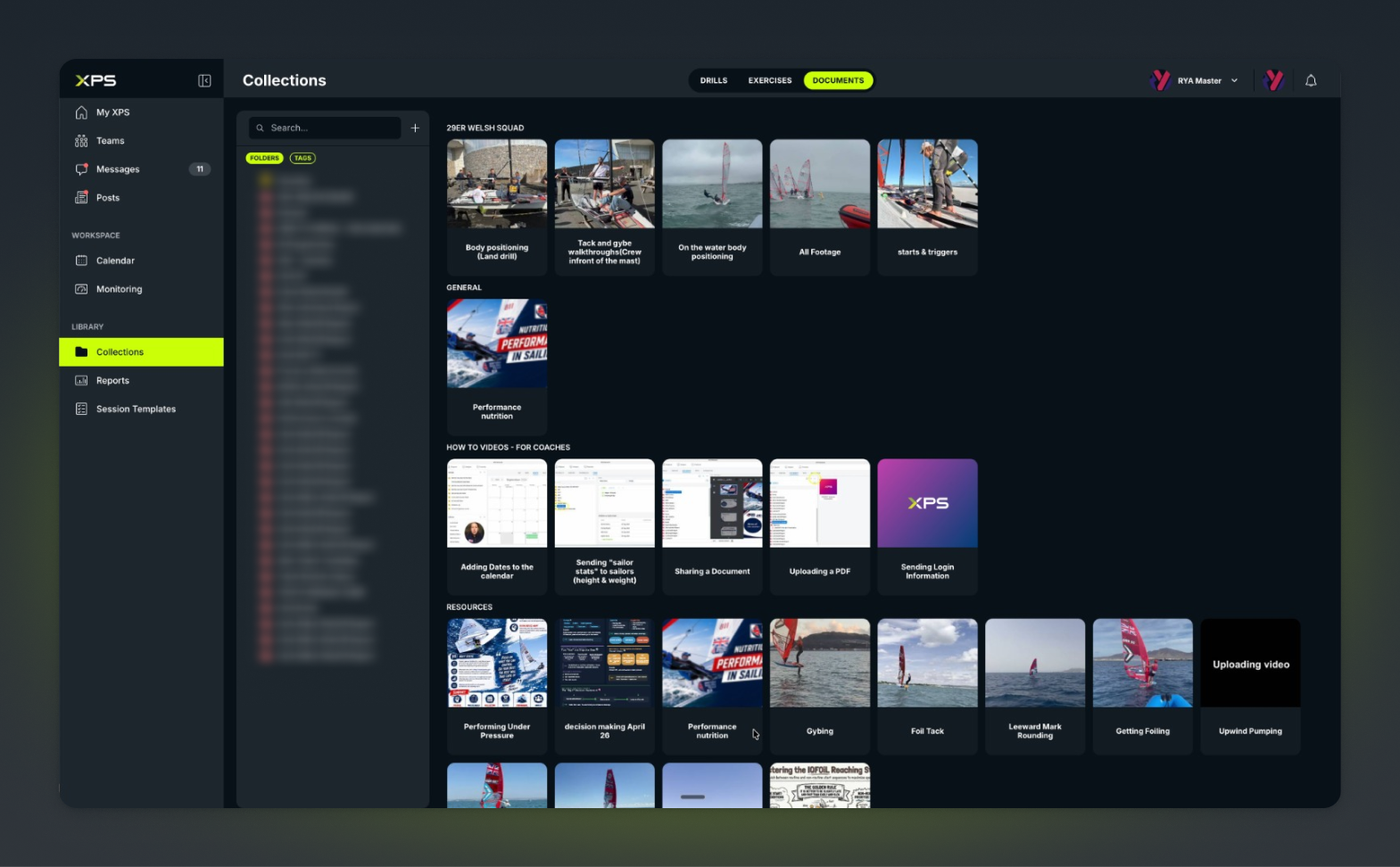
Between camps, coaches needed a consistent way to record and share what they were seeing. The difficulty of building a complete picture from information spread across several places soon became clear: “Our sailors are spread across the UK, competing in different classes, training with different coaches and often working in different environments. Historically, information could sit in different spreadsheets, documents, emails or individual coach systems. That made it difficult to create one clear picture of an athlete’s development over time.”
The issue was fragmentation, not a lack of detail: physical testing could sit in one place, coaching notes in another and individual priorities somewhere else.
At its central camps, the British Sailing Youth Team runs XPS workshops with athletes and coaches. After returning home, they continue using the app to report on schedules, training and self-assessments, giving pathway staff a more consistent view of what happens between face-to-face sessions.
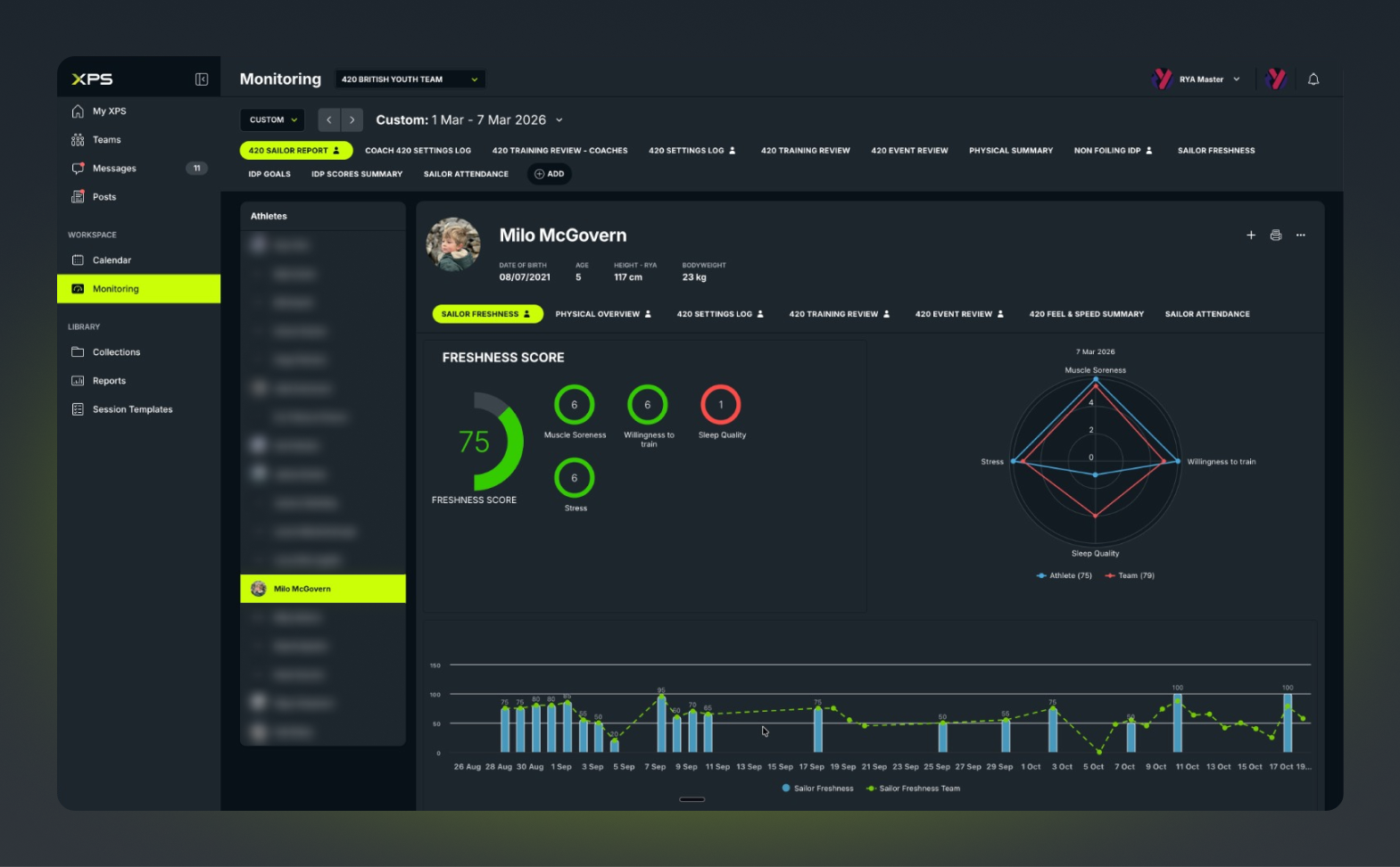
For Oli Woodcock, Youth Racing Manager, the point is not to collect more information, but to make it useful and visible to everyone involved, including the athletes themselves: “The challenge was not necessarily a lack of information, but bringing it together in a way that was useful and accessible to everyone supporting the sailor. We also wanted sailors themselves to have greater ownership. Rather than development information being something that primarily sat with the coaching team, we wanted athletes to be able to see and engage with their own development journey.”
Every sailing class places different demands on the body. The physical needs of a 29er crew, for example, are not identical to those of someone competing in ILCA, iQFOiL or Formula Kite.
For each class, the RYA monitors a relevant set of strength and conditioning measures. These help staff understand each athlete’s physical capabilities and guide the next stage of their individual programme.
Alongside physical testing, the RYA has developed detailed Athlete Development Profiles. Athletes assess their own skills across the areas that matter for their age group and class, comparing their current level with the relevant world-class standard.
This creates a useful starting point for the next conversation. It can show where the athlete feels confident, where the coach sees things differently and which areas may need more attention.
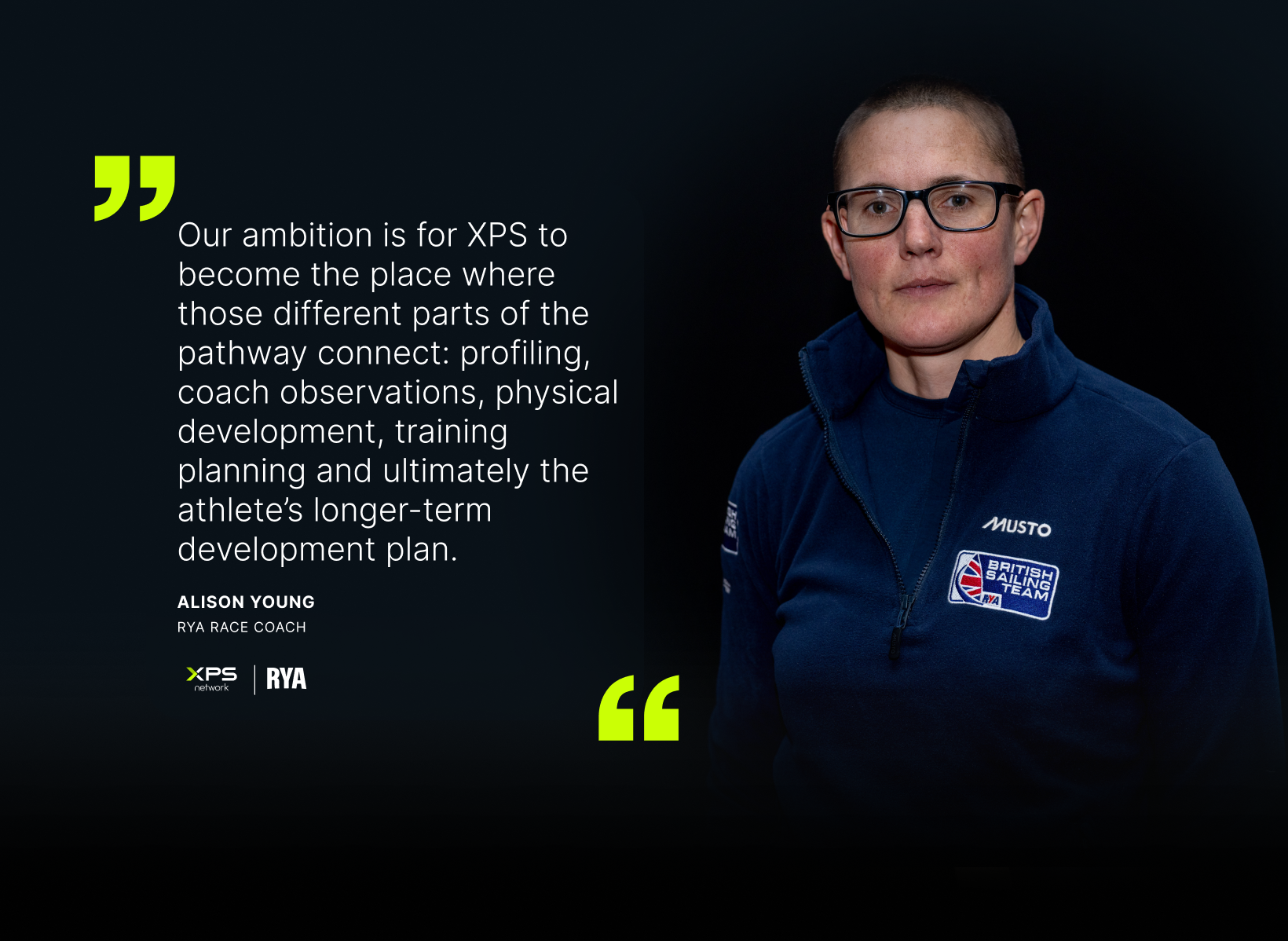
The profile is only one part of a wider process. Alison Young, RYA Race Coach, sees the connection between coach observations, athlete access and longer-term planning as the key to making it useful: “Coaches can then record observations and monitor development over time, while sailors can access the information through the app and engage with their own programme. Our ambition is for XPS to become the place where those different parts of the pathway connect: profiling, coach observations, physical development, training planning and ultimately the athlete’s longer-term development plan.”
The profile is not treated as a final judgement or a score to chase. Its value comes from helping everyone involved agree on what to work on next.
That ambition already stands out to people who see the pathway from outside the RYA itself. Rob Newson, Country Manager for XPS Network UK & Ireland, has watched plenty of elite programmes build their systems: “The RYA are building athlete development profiles rivalling anything I’ve seen in any sport. Through XPS Monitoring every athlete in the pathway can see where they’re at and what it takes to reach the gold-medal level. Not only that, but Coaches have a birds-eye view of athlete progress across disciplines.”
Testing only becomes useful when it changes what happens next. A set of results may reveal a physical gap, but the coach and athlete still need to understand what it means and decide how to respond.
For the British Sailing Pathway, that could lead to a new strength and conditioning priority, a technical focus or a change to the individual programme. In other cases, it may simply give the athlete greater awareness of an area that needs attention.
For Jonny McGovern, Performance Pathway Manager, assessment should be the beginning of the next training decision rather than the end of a testing cycle: “The important part for us is turning that assessment into action. Rather than testing being something that happens periodically and then disappears into a spreadsheet, we want it to help shape what the sailor actually does next.”
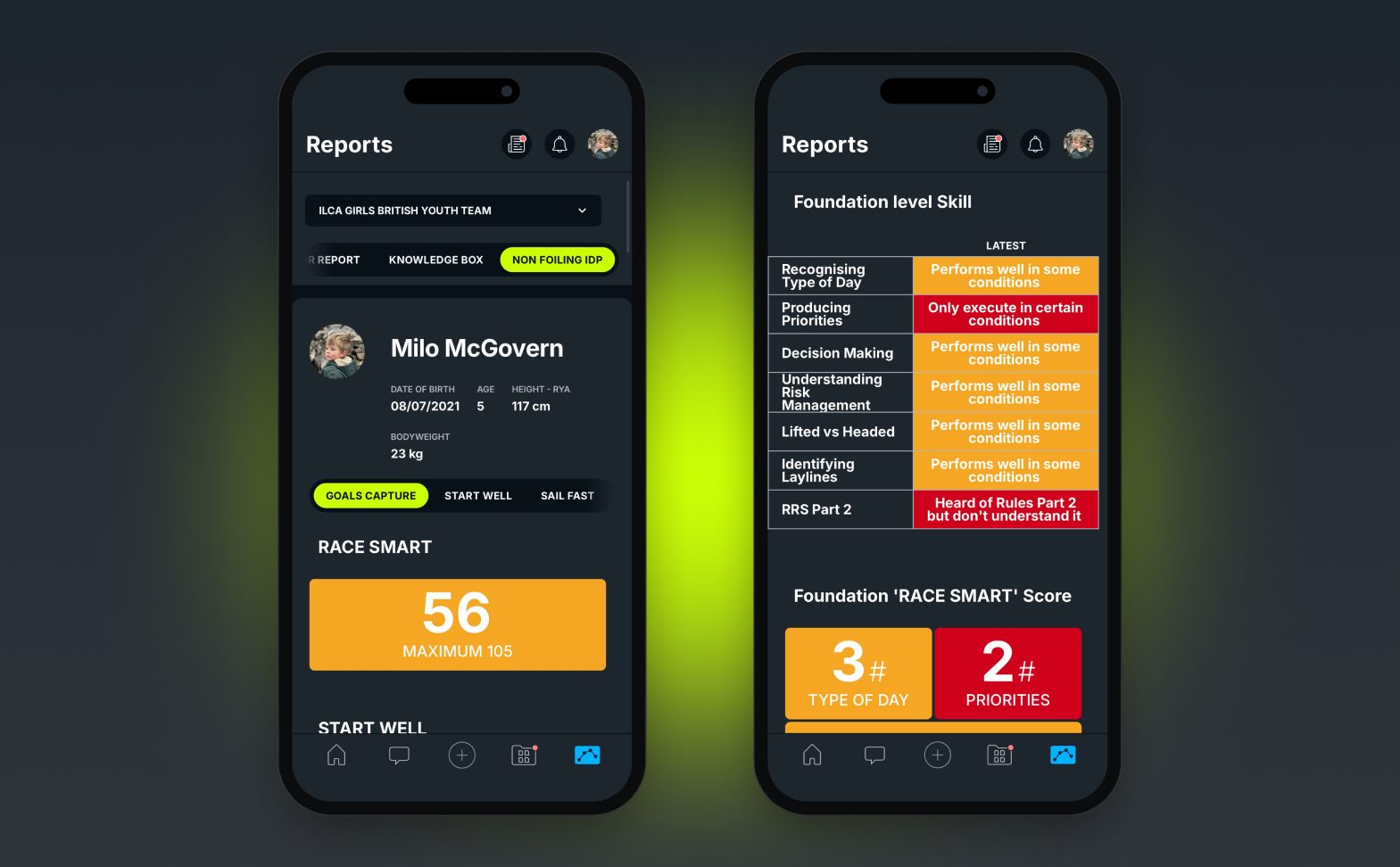
The RYA is still building this approach across the British Sailing Pathway, but physical profiling is already making coaching conversations more specific. Instead of giving someone a broad message about becoming stronger or more robust, the testing can identify where the clearest gap sits.
Narrowing the focus to something the athlete can understand and act on also changes the tone of the discussion. That clarity can make the conversation more useful for both sides: “That allows the coach and support team to have a much more focused conversation with the sailor and agree on a clear priority rather than trying to improve everything at once. Equally, when the sailor can see that information themselves, it changes the conversation. It becomes less about being told what to do and more about understanding why a particular area matters to their development,” says Jonny McGovern.
Coaches can then add observations and follow progress through testing, reports and athlete feedback. As more information is collected, staff can look beyond individual testing days and follow progress over months and years, turning individual test days into a longer development story.
Continuity matters in any long-term athlete pathway. In sailing, where a competitor may change class, coach or programme as they progress, it becomes especially important.
The RYA wants each athlete’s development history to move with them. When a new coach becomes involved, they should be able to see what has already been discussed, which priorities have been set and how that individual has responded.
The need for continuity becomes even greater when several coaches and specialists support the same person. McGovern sees a shared record as a practical way to keep everyone working from the same priorities: “Sailing is a complex sport and our athletes are supported by a number of different people. The challenge is making sure everyone is working from the same picture and towards the same priorities. XPS gives us a platform where the sailor, class coach, pathway coaches and support team can all contribute to and understand that picture.”
This does not replace good coaching judgement; it gives the next conversation a stronger starting point. The athlete arrives with a better understanding of their own progress, while the coach has the context needed to offer clearer guidance.
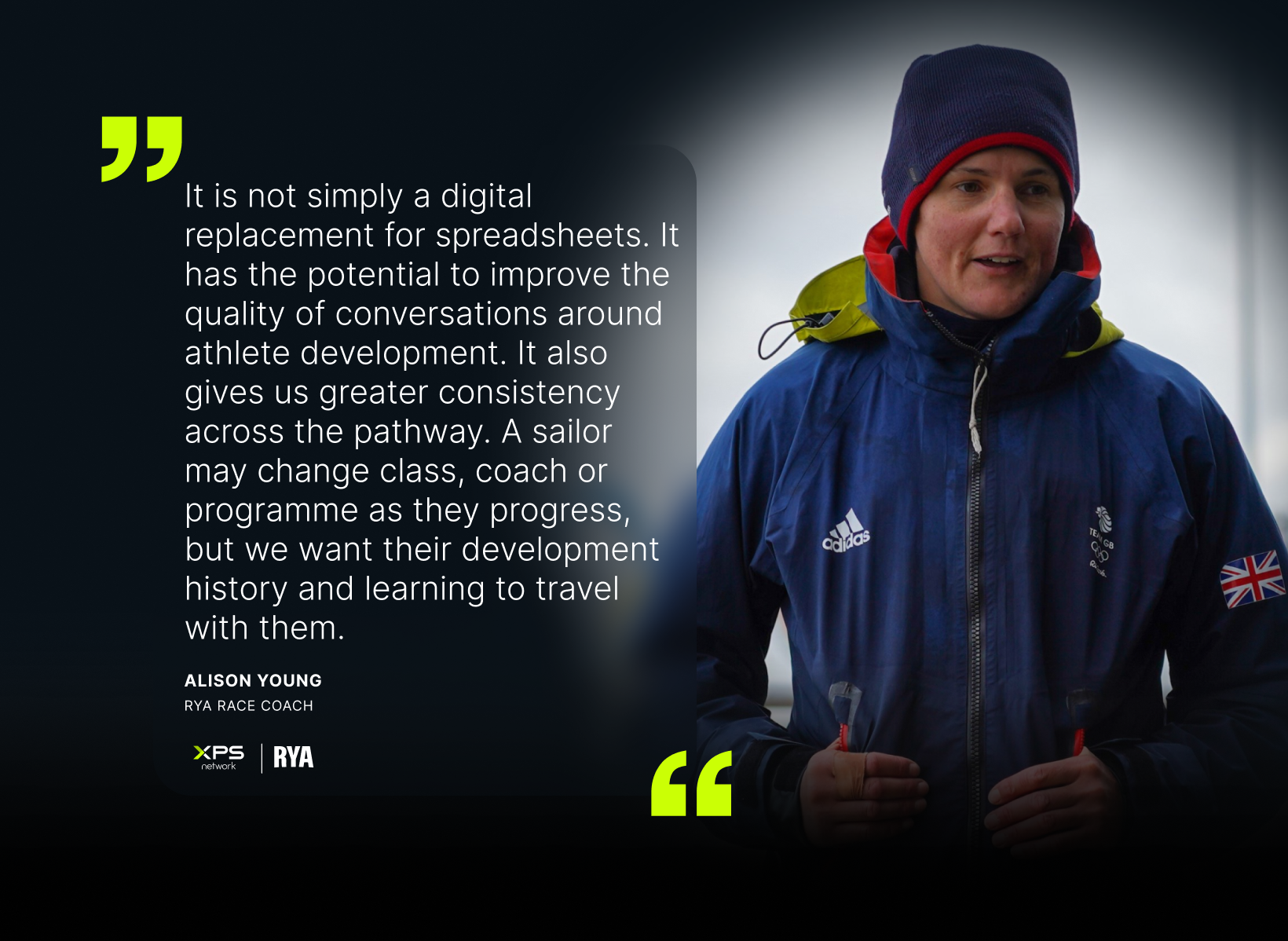
That shared history should remain useful even when an athlete changes class, coach or programme. For Alison Young, RYA Race Coach, its real value lies in better conversations and greater consistency across the pathway: “It is not simply a digital replacement for spreadsheets. It has the potential to improve the quality of conversations around athlete development. It also gives us greater consistency across the pathway. A sailor may change class, coach or programme as they progress, but we want their development history and learning to travel with them.”
For coaches and technical directors building a long-term pathway, that may be the most useful lesson. Information is only one part of the job; what matters is whether it helps athletes and coaches agree on the next step.
The RYA’s longer-term goal is not more data for its own sake, but a clearer link between information, decisions and athlete ownership. The final measure is whether that approach leads to better conversations and stronger ownership: “Ultimately, we are trying to create a system where better information leads to better conversations, better decisions and greater ownership from the sailor themselves. That is where we see XPS having the biggest long-term impact.”

We are at the final stage before releasing the new AI-powered features for XPS Network, and before anything goes...
Read More
A new connection brings KINEXON Sports player-tracking data into customizable XPS Reports, allowing coaches, performance staff and sports directors...
Read More
This past weekend, our global sales team came together in Belgrade, Serbia for several inspiring days of conversation, collaboration...
Read MoreThank you!
Our representative will get back to you soon with time suggestions for an online meeting.
If you have any questions contact us at support@sidelinesports.com
Schedule a short online meeting with our representative
Try free XPS 14-days trial right now No credit card required


